Author’s Note
I reiterate, but none of this is a blueprint. I am not the one to craft the mechanics of a future democracy. In fact, I’d like to call it something else. I can outline a direction on how local decision-making might function when it coexists with domain-based assemblies and global coordination. This is not perfection. It is a provocation. And if some parts sound awkward or incomplete, that’s good. That’s where the discussion begins.
The Local First
At its core, governance must be local. People are familiar with their streets, schools, rivers, and neighbours. They observe the effects of decisions directly, making local decision-making not only more legitimate but also more intelligent.
Local autonomy is not absolute. A town can decide what to build, but it cannot control how much of any chemical the soil can absorb. A city can plan water usage, but rivers do not stop at municipal borders. A country may vote on energy policies, but minerals, grids, and supply chains connect it to others.
This tension between the closeness of local life and the scale of shared systems is where the idea of local democracy under pressure lives.
An example: The Water Plant Dispute
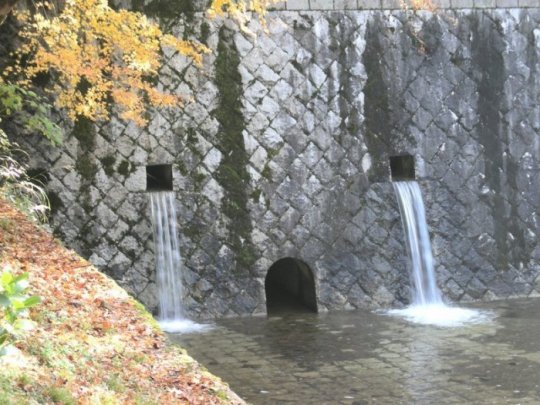
Imagine a town facing recurring droughts. Wells are drying, summers are hotter. Residents propose building a new pumping station on the nearby river. On the surface, it seems simple: the town needs water, so build the plant.
The proposal goes through the local process. Citizens submit their case: costs, location, and expected output. A panel of randomly selected residents holds hearings. Farmers describe their irrigation struggles. Families describe taps running dry. Engineers explain the technical side. Local ecologists warn: the proposed intake site would disrupt spawning grounds for fish already in decline.
Then the domain pressure arrives. The Water Domain Assembly reviews the proposal and issues a formal notice: the river is already at its ecological minimum during summer. Drawing more water here would breach the agreed threshold and damage downstream communities. They don’t say “no.” They outline options:
Move the intake upriver where the flow is stronger.
Pair pumping with wetland restoration to buffer droughts.
Combine it with rainwater capture from rooftops.
The town is free to decide—but only inside this design space.
And then comes global pressure. The global coordination body adds a condition: the proposed pumping system, as designed, would disrupt a migratory fish route critical for regional biodiversity. The alert doesn’t ban the project. It requires proof that the design will preserve the corridor.
However, the project also attracts global support because this migration route is recognised as a global common. The water plant is partly covered by global funding, since protecting the fish corridor is in everyone’s interest. As an added incentive, the town is offered resources to build a small museum and education centre about the species and its role in the ecosystem, turning a constraint into a source of local pride and learning.

So, the town revises the plan. After the debate, they voted for the upriver site, which has redesigned intake structures that allow fish passage and a municipal rainwater program. It passes with a supermajority. The project is approved—but with a five-year review date. The license is automatically suspended and redesigned if biodiversity indicators fall below set thresholds.
This is what “local democracy under pressure” looks like: free to choose, but never free to pretend reality doesn’t exist.
When the Local Meets the Global
The water plant story is not fiction. Versions of it are already playing out. The conflict between Ethiopia, Sudan, and Egypt over the Grand Ethiopian Renaissance Dam illustrates how a single river can bind nations together in fragile alliances. In Flint, Michigan, local mismanagement of the water supply led to a public health catastrophe because no higher-level safeguards intervened in time. South Africa’s rolling blackouts demonstrate how failing to coordinate local and national energy planning can lead to cascading breakdowns.
The lesson: Locals must decide—but within real limits. Those limits come from shared ecological thresholds and global responsibilities.

Technology and Law in Plain Language
For this to work, local communities need tools. Not fancy ones—just reliable ones.
A digital platform where proposals are logged, debated, and tracked, with plain-language summaries and open data.
A verifiable voting system with paper backups that is accessible to everyone—not just the tech-savvy.
A public ledger where all budgets, contracts, and maintenance schedules are visible.
Local charters that enshrine process over personality: decisions expire unless renewed with evidence, secrecy is rare and sunset-bound, and roles are rotating and recallable.
These are not utopian technologies. They already exist. The difference is whether we design them as public commons or leave them to private monopolies.
Universal Basic Income in Local Hands
Global coordination doesn’t only set boundaries. It also supplies the floor: a universal basic income.
The mechanics are important. The global bank allocates an income linked to the local cost of living. The baseline is higher in a town with high rent and energy prices. In a village with lower costs, the baseline is lower. Over time, as housing stabilises and energy sources become renewable, these differences tend to narrow.
Local communities can build on top of this floor. A cooperative energy project can provide dividends. A local land trust can reduce housing costs. The base is global; the building is local.
This makes local democracy more than budgeting scraps. It gives people real room to breathe, plan, and say no to exploitative proposals—because survival isn’t on the line every month.

Close: Local, Under Pressure
Local democracy is not about nostalgia for town halls or parish councils. It is about intelligence: decisions made where consequences are visible. But for that to matter, local choices must be shaped by the thresholds of rivers, the limits of the atmosphere, and the guarantees of a shared human floor.
When done well, this isn’t a loss of freedom. It is freedom becoming real. Because freedom without thresholds is denial, and denial collapses into disaster.
The town that builds its water plant within ecological and global boundaries is freer than the one that drains its river dry.
Conclusion: The Direction — Freedom Through Tools
Local democracy under pressure is not about surrendering freedom. It is about making freedom real because freedom without thresholds is denial, and denial collapses into disaster.
A deep and all-encompassing approach involves recognizing what we have already built, what works, and what needs to adapt or change for the new system that emphasizes both local and global aspects.
The system we’ve sketched here, as local decision-making, guided by domain thresholds and global guardrails, does more than set limits. It clears the ground for freedom by guaranteeing access to the basic tools of participation.
We must draw a line:
Tools are enablers. A basic phone and data connection. Public transit and reliable goods delivery. A baseline of electricity for heat, light, and connectivity. Universal internet access. First-line healthcare. Open access to education. Without these, people are locked out of society.
Luxuries are expressions of taste or status. The latest flagship phone, a luxury car, and exclusive clubs. These are choices, not necessities, and they remain private.
Communication spans both digital and physical worlds. Phones and the internet are vital for information and staying connected. Goods delivery and personal transportation are crucial for movement and logistics. All of these are lifelines in modern life, and none should be denied based on income levels.
Each of these topics: communication, logistics, energy, healthcare, and education—deserves its own in-depth discussion. However, the principle should be clear: the goal of governance without rules is to ensure that everyone has the basic tools to live, move, learn, and connect. This is not generosity. They are functions. And it is the shape of the utopia we must dare to talk about. Not perfection, but direction. A world where freedom is real, because the tools of freedom are standard.
Summary: What Local Democracy Under Pressure Means
Local communities decide on most topics, but within the boundaries of thresholds shared on a larger scale. Geographically, chemically, geological, and so on.
Domain assemblies intervene only when thresholds are at risk.
Global coordination adds two functions: guardrails for existential risks and ensuring equal rights.
Local decisions are made through open proposals, citizen panels, verifiable voting, and mandatory reviews.
Technology is transparent and accessible, law is process-based, and secrecy is minimal.
Freedom is not the absence of limits. It is choosing well inside them.